Global energy markets remain highly volatile, and businesses must monitor production, storage, and logistics closely to manage crude oil prices effectively. Refinery utilization of 88–92% and transportation costs of 10–15% directly influence profitability and operational decisions. Seasonal demand spikes, emerging-market growth of 2–3%, and geopolitical tensions can cause oil prices to swing by 4–10%, impacting investment and budgeting strategies.
Companies hedge 50–70% of expected volumes using futures, swaps, and options to stabilize margins. Traders, refiners, and procurement professionals rely on daily trading volumes, inventory data, and predictive analytics to adapt to fluctuations, ensuring sustainable operations and informed career decisions in energy trading, refinery management, logistics, and maintaining stable crude oil prices.
| Basics | Value / Insight |
| Daily Trading Volume | 25M contracts |
| Gulf Coast Storage | 500M barrels |
| Refinery Throughput | 88–92% utilization |
| Global Production | 95M barrels/day |
| North America Output | 17M barrels/day |
| Inventory Spike | <450M barrels raises 4–7% |
| Transportation Cost | 10–15% delivered cost |
| Rail Rate Hike | 7% increases the cost |
| Crack Spread | $25+ per barrel |
| Maintenance Impact | 5–7% output drop |
| Seasonal Demand | +3–5% quarterly |
| Speculation Volume | 40–50% daily trades |
| Geopolitical Risk | 1–3M barrel/day cut |
| Hedge Coverage | 50–70% volume |
| Environmental Cost Impact | 2–5% price increase |
| Emerging Market Growth | 2–3% annual demand |
| Margin Protection | 12–18% gross margins |
Major Trading Hubs and Volumes
Crude oil prices are heavily influenced by major trading hubs such as Houston, New York, and London, where daily futures and options volumes exceed 25 million contracts. Gulf Coast storage exceeds 500 million barrels, while Midwest terminals handle billions of barrels annually.
Utilization rates above 85% signal a tight supply, prompting traders, refiners, and logistics teams to optimize hedging strategies and working capital allocation for cost efficiency.
Global Production & Crude Oil Prices

- Global crude production exceeds 95 million barrels per day, with North America contributing over 17 million barrels.
- OPEC adjusts monthly quotas by ±1–2 million barrels to stabilize markets.
- Refinery utilization averages 88–92% in peak seasons.
- Data shows that a 5% reduction in global output can increase crude oil prices by 6–8% in the short term, affecting budgeting and investment decisions across energy-intensive industries.
Inventory Levels and Storage Impacts
Storage and inventory levels play a critical role in determining prices. Strategic reserves above 500 million barrels often suppress market values, while declines below 450 million barrels can trigger price spikes of 4–7%. Utilization ratios above 85% indicate a tightening supply. Companies rely on storage data and pipeline throughput reports to plan procurement, reduce risk exposure, and maintain profit margins.
Transportation and Logistics Costs

Transportation costs account for 10–15% of total delivered crude costs. Rail rate increases of 7% or port congestion can reduce margins by up to 2%. Pipeline bottlenecks add 3–5% to costs. Businesses implement route optimization, telematics, and fuel hedging strategies to manage volatility, ensuring that EBITDA margins remain above 12–15% even during periods of rising global freight rates and logistical challenges.
Financial Markets and Speculation
Investor activity significantly impacts crude oil prices, with hedge funds and institutions executing thousands of trades per second. Futures and options trading account for 40–50% of daily volume. Algorithmic and high-frequency trading create intraday swings of 1–2%. Businesses monitor moving averages, RSI indicators, and volatility bands to inform procurement and capital planning, maintaining stable margins despite speculative market activity.
Geopolitical Events and Policy Influence
Geopolitical instability can drive crude oil prices sharply higher. Conflicts in major producing regions or sanctions may reduce output by 1–3 million barrels daily, increasing prices by 5–10%. OPEC production decisions also affect supply levels. Companies use risk-adjusted scenario modeling to forecast potential price changes and develop procurement, hedging, and investment strategies to mitigate financial exposure during periods of political uncertainty.
Refinery Capacity and Margins
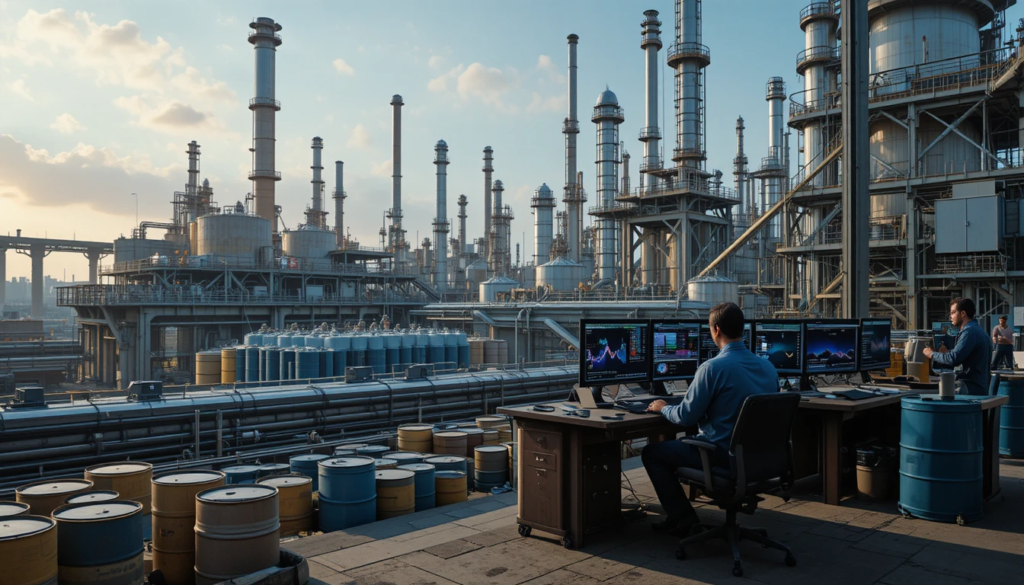
Refinery utilization rates of 88–92% support higher oil prices during peak demand periods. Crack spreads exceeding $25 per barrel increase downstream profitability by 8–12%. Scheduled maintenance or unplanned shutdowns reduce output by 5–7%, temporarily lowering spot prices. These factors guide procurement strategies, investment planning, and margin protection for refineries and energy-intensive manufacturing businesses.
Seasonal Demand Variations
- Crude oil prices are influenced by seasonal demand patterns, with winter heating increasing consumption by 3–5% per quarter.
- Summer travel spikes fuel usage, affecting refining margins.
- Energy companies forecast seasonal patterns to optimize procurement schedules, inventory management, and hedging strategies.
- Maintaining gross margins above 15–18% while
- Managing overstock or supply shortages in response to cyclical market fluctuations.
Hedging and Risk Management Strategies
Companies hedge 50–70% of expected crude volume using futures, swaps, and options. Scenario modeling examines potential price swings of 5–15%. Value-at-Risk and sensitivity ratios guide financial and operational planning, stabilizing EBITDA margins above 12%, mitigating exposure to volatility, and ensuring sustainable business operations despite fluctuating crude oil prices.
Emerging Market Demand
Emerging economies contribute 2–3% annual growth in crude demand driven by industrialization, urbanization, and rising transportation needs. Refinery expansions, pipeline development, and import volumes from Asia, Africa, and Latin America influence global prices. Businesses secure long-term supply agreements and diversify procurement to manage exposure and stabilize margins across global operations.
Economic Indicators and Market Sensitivity

Economic factors such as GDP growth, industrial output, and inflation rates directly impact oil prices. A 1% increase in GDP can boost energy demand by 0.5–1%, raising prices by 2–4%. Companies leverage predictive analytics, scenario modeling, and historical price correlations to plan procurement, adjust production schedules, and manage financial risks in a volatile market.
Conclusion
Global energy markets remain volatile, and companies must track production, storage, and logistics to manage crude oil prices effectively. Refinery utilization, transportation costs, and seasonal demand spikes influence profitability and investment decisions.
Geopolitical events and emerging-market growth of 2–3% can drive volatility, requiring hedging of 50–70% of expected volumes. Traders and refiners use inventory data, predictive analytics, and strategic planning to maintain margins. Overall, understanding market dynamics helps businesses and professionals adapt to changes while ensuring stable crude oil prices across operations.
Want to know about Commodity Prices: Comprehensive Market Analysis, Strategic Insights, Risk Management, and Profit Optimization for Businesses and Investors Check out our Marketing category.
FAQs
When global output declines or major producers reduce shipments, market supply tightens. This often raises costs, while oversupply can lower prices, influencing profits and investment decisions for businesses.
Transportation accounts for a considerable portion of overall expenses. Rail rate hikes, pipeline congestion, and shipping logistics can increase delivery costs, affecting refinery margins and overall operational efficiency.
Demand rises during winter heating and summer travel periods, which increases energy consumption. Companies plan inventory and procurement strategies to manage these seasonal fluctuations effectively.
Investor activity, including futures and options trading, drives daily price swings. Algorithmic and high-frequency trading create intraday volatility, affecting margins and procurement planning worldwide.