


The US stock market is one of the most influential financial markets in the world, providing a platform for investors to buy and sell shares of publicly traded companies. It plays a critical role in economic growth by enabling businesses to raise capital while offering individuals opportunities to build wealth.
Emerging in the late 18th century, the market has evolved into a sophisticated network of exchanges, including the New York Stock Exchange and NASDAQ, supported by modern technology and regulatory oversight. Stock prices are shaped by factors such as economic indicators, corporate earnings, and interest rates, making it essential for investors to stay informed.
With diverse investment options ranging from common and preferred stocks to growth and dividend stocks, the US Stock Market caters to varying financial goals, risk levels, and investment strategies.
| Category | Key Details |
| Purpose | Public share trading |
| Function | Capital raising platform |
| Benefit | Wealth creation opportunities |
| Origin | Late 18th century |
| First Exchange | Philadelphia exchange 1790 |
| Major Exchanges | NYSE & NASDAQ |
| System | Electronic trading systems |
| Participation | Investor marketplace |
| Order Types | Market & limit orders |
| Participants | Retail & institutional investors |
| Price Drivers | Corporate earnings impact |
| Economic Factors | Economic indicators influence |
| Interest Rates | Federal Reserve policy |
| Stock Types | Common & preferred stocks |
| Growth Options | Growth & value stocks |
| Income Focus | Dividend income options |
| Stability | Blue-chip stability |
| Risk Category | Penny stock risks |
| Strategy | Active investing strategy |
| Approach | Passive investing approach |
| Funds | Index funds & ETFs |
| Technology | Online trading platforms |
| Innovation | Algorithmic trading growth |
| Regulation | U.S. Securities and Exchange Commission oversight |
US Stock Market

The US stock market is a vital financial platform where investors buy and sell shares of publicly traded companies, playing a crucial role in the economy by facilitating capital raising and wealth accumulation. Established in the late 18th century, the market has evolved significantly, including the emergence of major exchanges like the New York Stock Exchange (NYSE) and Nasdaq.
Factors such as economic indicators, corporate earnings, and interest rates influence stock prices, making it essential for investors to stay informed about trends and market dynamics. With various types of stocks available, including common, preferred, growth, and dividend stocks, the US stock market offers diverse investment opportunities tailored to different financial goals and risk tolerances.
History and Evolution of the US Stock Market
Early Beginnings
The origins of the US stock market can be traced back to the late 18th century. The first stock exchange in the US was established in Philadelphia in 1790. This was a time when the nation was still in its infancy and needed financial structures to support emerging businesses. The market primarily consisted of government bonds and bank shares.
The New York Stock Exchange
In 1817, the foundations of what would become the New York Stock Exchange (NYSE) were laid when a group of stockbrokers gathered to formalize trading practices. The NYSE grew rapidly, with significant events such as the Panic of 1837, which triggered an economic downturn and severely affected stock prices.
By the late 19th century, the NYSE had established itself as the leading stock exchange in the US, with over 1,000 listed companies by 1900. The advent of the telegraph and the telephone transformed trade, enabling faster communication and transactions.
The Great Depression

The 1920s, known as the “”” Roaring Twenties,” saw unprecedented growth in stock prices and the rise of speculative investments. However, this boom ended with the 1929 stock market crash. The crash precipitated the Great Depression, leading to massive unemployment and economic stagnation. In response, the US government implemented reforms, such as the Securities Act of 1933 and the Securities Exchange Act of 1934, to increase transparency and regulate the market.
Post-War Expansion
After World War II, the US stock market experienced a long-term upward trend. The economic boom of the 1950s and 1960s, fueled by industrial growth and technological advancements, saw stock ownership among Americans rise. The introduction of the index fund in 1976 by John Bogle of Vanguard made investing more accessible, allowing average investors to participate in the market easily.
The Dot-Com Bubble and Financial Crisis
The late 1990s saw the emergence of the internet and technology companies, leading to a massive surge in stock prices in the dot-com bubble. By 2000, this bubble burst, resulting in substantial losses for investors.
Following a series of financial crises, including the 2007 subprime mortgage crisis, the US stock market experienced another severe downturn. The response involved significant government interventions, including the Troubled Asset Relief Program (TARP) and the establishment of the Dodd-Frank Act to regulate financial institutions.
The Rise of Technology and E-Trading
In the 21st century, technological advancements changed how investors trade stocks. The rise of online brokerages and algorithmic trading transformed trading practices. Investors can trade stocks at lower costs and access real-time information, making the market more efficient.
How the US Stock Market Works

- Market Structure: The US stock market comprises several exchanges, with the NYSE andNasdaq being the most prominent. The NYSE is characterized by its physical floor and is known for trading large, established companies. In contrast, the Nasdaq is a fully electronic exchange that primarily lists technology and growth-oriented companies.
Trading Mechanics
Stocks are bought and sold through a system known as the order book, where buy and sell orders are matched. Orders can be categorized as:
- Market Orders: Buy or sell orders executed immediately at the current market price.
- Limit Orders: Buy or sell orders set at a specific price, executed only when the market reaches that price.
- Stop Orders: Orders that trigger when a stock reaches a specified price, turning into market orders.
- Market Participants: Various players participate in the stock market, including retail investors, institutional investors, market makers, and hedge funds. Institutional investors, such as mutual funds and pension funds, control a substantial portion of the market and significantly impact stock prices.
Factors Influencing Stock Prices
Several factors influence stock prices, including:
- Earnings Reports: Companies report their financial performance quarterly. Positive earnings can drive stock prices higher, while disappointing results may lead to declines.
- Economic Indicators: Metrics such as GDP growth, unemployment rates, and inflation can affect investor sentiment and market trends.
- Interest Rates: Changes in the Federal Reserve’s interest rates can affect borrowing costs, influencing corporate profits and investment.
Types of Stocks in the US Market
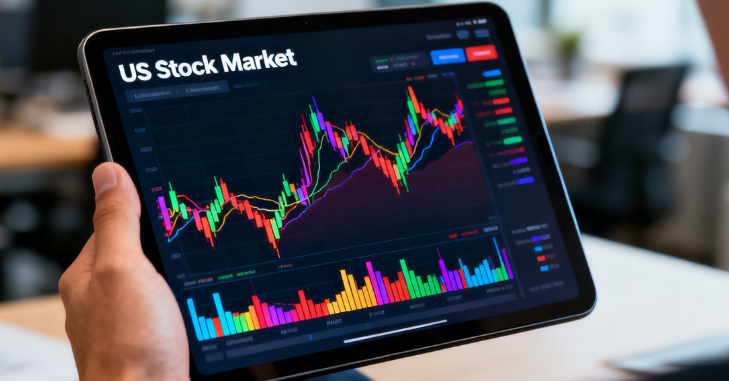
The US stock market offers a diverse range of stocks, catering to a range of investment strategies and risk appetites. Common stock represents ownership in a company and typically includes voting rights, allowing shareholders to benefit from capital appreciation and dividends, though dividends are not guaranteed.
In contrast, preferred stockholders have a higher claim on assets during liquidation and usually receive fixed dividends without voting rights. Growth stocks are shares of companies expected to grow at an above-average rate, often reinvesting profits instead of paying dividends.
Value stocks are perceived as undervalued based on fundamentals such as earnings or sales, attracting investors looking to capitalize on potential price corrections. For income-focused investors, dividend stocks offer regular payouts and are generally linked to stable, established companies.
Meanwhile, blue-chip stocks represent reputable firms with consistent earnings and dividends, considered safe investments. Lastly, penny stocks are low-priced shares that often trade below $5 and can offer high rewards but come with significant risks due to less regulation.
Investment Strategies
Investing in the stock market involves various strategies, which can be categorized as active or passive.
Active Investing
Active investors seek to outperform the market by frequently buying and selling stocks based on analysis and market trends. This strategy requires a deep understanding of financial markets and often incurs higher transaction costs.
Passive Investing
Passive investing involves buying and holding a diversified portfolio of stocks for the long term, often through index funds or exchange-traded funds (ETFs). This strategy aims to mirror market performance rather than trying to beat it.
Regulation and Oversight
Several agencies regulate the US stock market to ensure fairness, transparency, and investor protection. The primary regulatory body is the Securities and Exchange Commission (SEC), which oversees securities transactions, enforces securities laws, and protects investors against fraud.
The Role of the SEC
The SEC has the authority to regulate securities markets, requiring public companies to disclose financial information, ensuring that investors have access to material facts before making investment decisions.
The Future of the US Stock Market

The US stock market continues to evolve, shaped by emerging technologies, changing economic landscapes, and global trends. Factors influencing its future may include:
- Technological Advancements: Innovations such as blockchain technology could revolutionize trading and transaction methods.
- Globalization: Increased interdependence with international markets could impact stock prices and investor behavior.
- Environmental, Social, and Governance (ESG) Investing: A growing focus on sustainable investing is influencing company valuations and investment strategies.
Conclusion
The US stock market is a dynamic and essential component of the global economy, providing a crucial platform for businesses to raise capital and for investors to build wealth. Since its inception in the late 18th century, it has evolved from a rudimentary trading venue into a sophisticated financial system, with major exchanges such as the New York Stock Exchange (NYSE) and Nasdaq offering diverse investment opportunities.
Understanding its operation is vital for anyone looking to invest; the market features various mechanisms, such as market orders and limit orders, that facilitate buying and selling shares. The influence of economic indicators, corporate earnings, and interest rates can significantly impact stock prices, highlighting the need for investors to stay informed.
Furthermore, the market offers a range of stocks tailored to different investment strategies and risk profiles, including common stocks, which provide ownership and voting rights; preferred stocks, which offer higher claims and fixed dividends; and growth stocks, known for their potential for rapid appreciation.
Value stocks attract investors seeking undervalued opportunities, while dividend stocks appeal to income-focused investors. As the market adapts to technological advancements and shifting economic landscapes, being well-informed empowers investors to navigate its complexities effectively, making informed decisions that align with their financial goals and ultimately enhancing their prospects for long-term success.
If you want to read an interesting article about it, explore our Real Estate category.
FAQs
Stock prices are affected by various factors, including economic indicators (such as GDP and unemployment rates), corporate earnings reports, Federal Reserve interest rates, and overall market sentiment.
Stock investing involves several risks, including market risk (the potential for losses due to market fluctuations), credit risk (the risk of a company defaulting), and liquidity risk (the risk of being unable to buy or sell shares quickly).
A stock market crash is a sudden, sharp decline in stock prices, often triggered by economic events, financial crises, or negative market sentiment, leading to widespread panic selling.

